
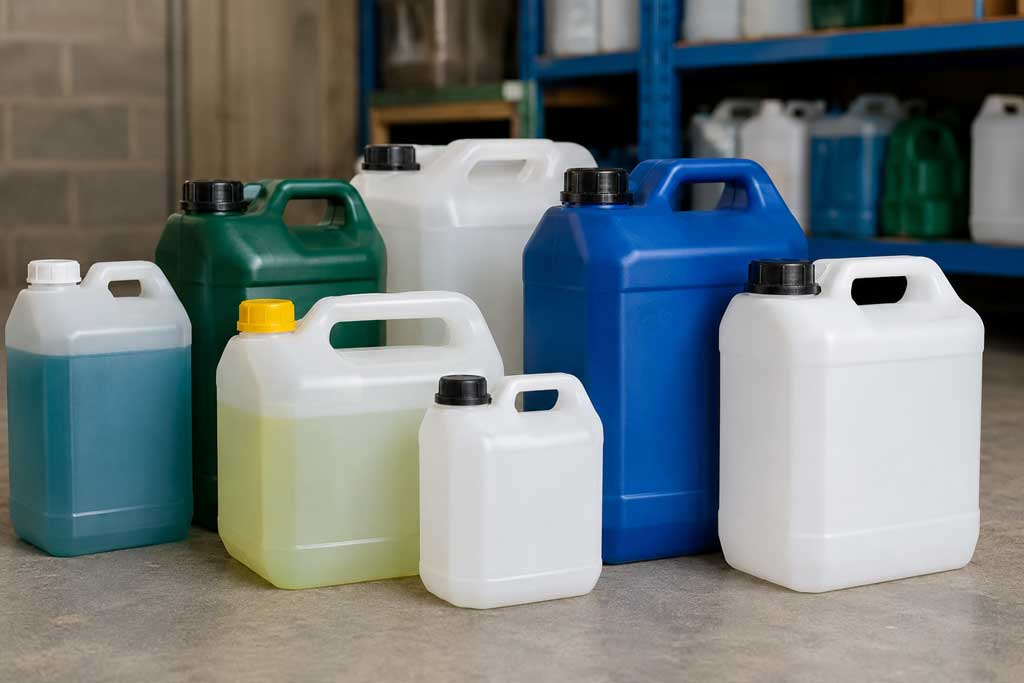
Most of us don’t spend much time thinking about containers. We notice the finished paint on the wall, the screenwash in the car, the hand soap by the sink. What slips by is the practical object that got those liquids from factory floor to storeroom without leaks or waste. It’s not exciting, but it is one of those quiet bits of infrastructure modern life depends on.
That helps explain why packaging formats matter most in ordinary settings. Small workshops, cleaning firms, growers, mechanics and food producers all need something stackable, durable and easy for one person to handle. In that world, plastic jerry cans are a familiar sight, not because they are fashionable, but because they solve an old problem: how to move and store liquid safely without making every job harder than it needs to be.
Why the humble jerry can still earns its keep
The appeal is mostly practical:
- they are lighter than many alternatives;
- their moulded handles make pouring less awkward;
- they stack neatly in limited storage space;
- they suit a wide range of essential, unglamorous jobs.
There is also something revealing in how widely they are used. A container like this sits where hygiene, transport, labour and cost meet. If it fails, somebody loses time, money or product. If it works, nobody mentions it. That is usually the sign of good industrial design. It does not draw attention to itself. It slips into daily routine.
For a general-interest reader, that may be the most interesting part. The objects that keep homes, farms, depots and small businesses running are rarely the ones we celebrate. Yet they shape everyday life. The canister on a shelf may not look like much, but it tells a larger story about why useful things last.
Featured image credit: AI generated.